
This is my gear list that I use on my adventures as of July 2026. Not everything comes on every trip, depending on the trip. For example is it a day trip/overnight trip/car camping etc.
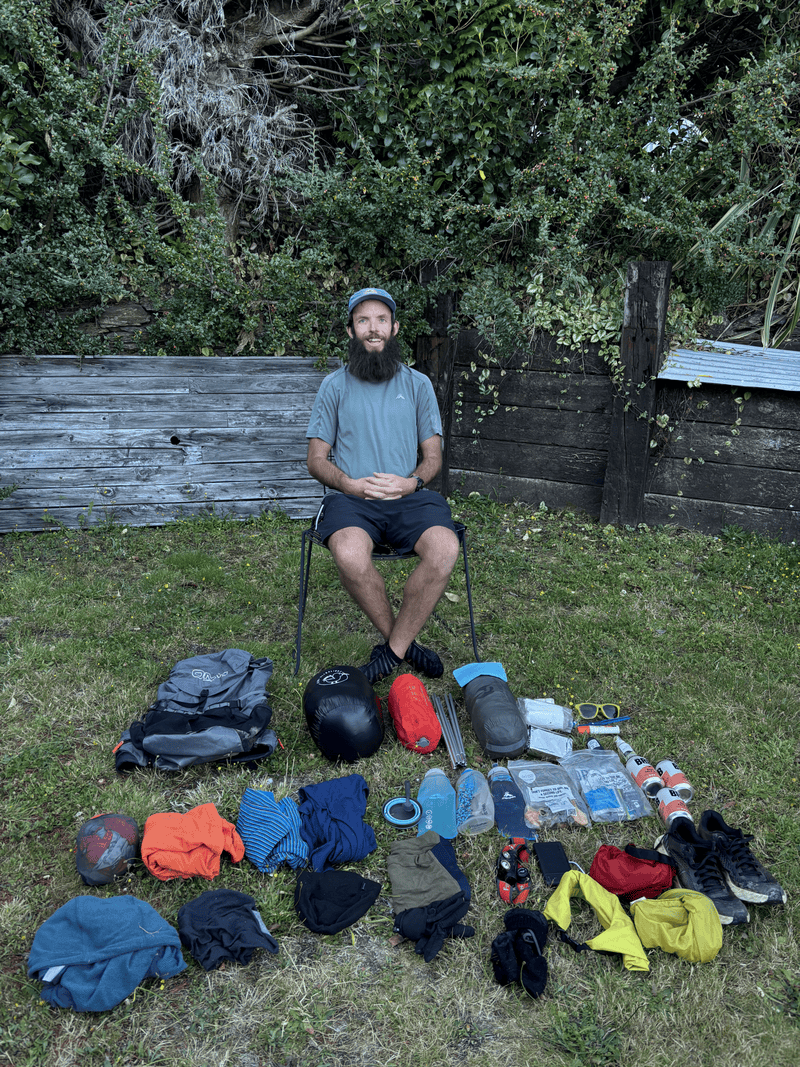
I’ve been meaning to write this post for a long time. After featuring in this Wilderness Article about the gear I use, I’ve finally put it down here.
I’ve added in more gear in this post than in the photo (see below) from the article.
If you have any questions about gear for hiking in New Zealand, send me an email jub@churnewzealand.com or leave a comment below. I’ll do my best to help.
Let’s get into it.
MY HIKING GEAR LIST
1. PACKS
2. SLEEP SYSTEM
3. TENT
4. CLOTHING
5. ACCESSORIES
1. PACKS
1. OMM CLASSIC 32
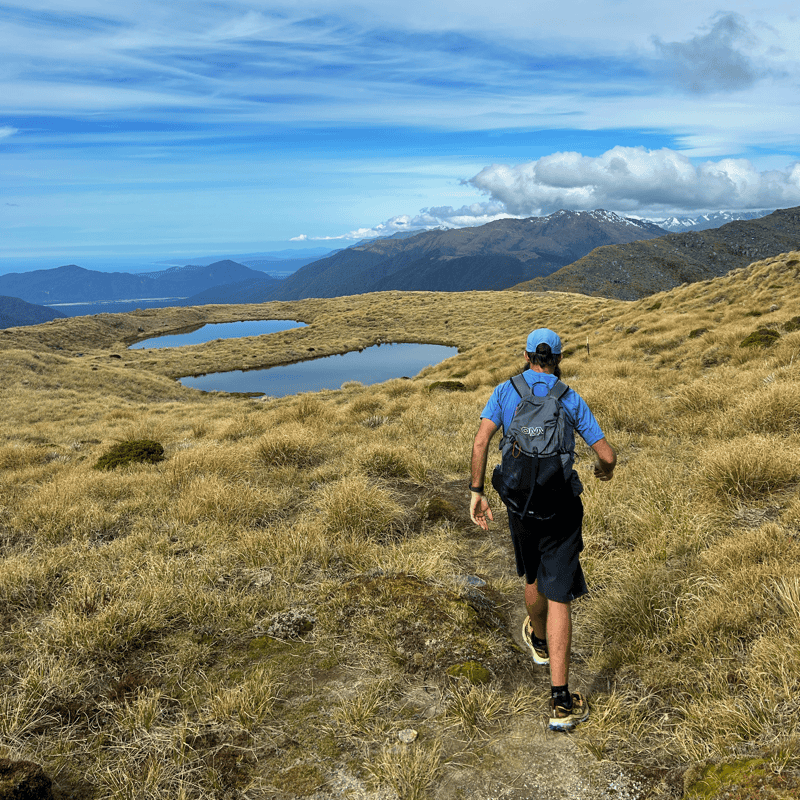
This is a pack that I initially borrowed off a friend but then bought it off him as I enjoyed it so much. It’s light enough at 685g, but feels sturdy. It’s simple enough with the main big pocket, and the top flap has a zip where all my nic nacs go.
There’s a stretchy pocket which is always good to stash things in. It’s not the best stretchy pocket I’ve seen, but it’s durable which I like. Then you’ve got the two pockets on the sides for you bottles and the hip belt pockets.
You can find out more here:
- The OMM Official Site (UK)
- You can buy it from Further Faster (Christchurch)
- Kinisi Running can likely source it too (Wanaka)
2. KIWI ULTRALIGHT TUI 42
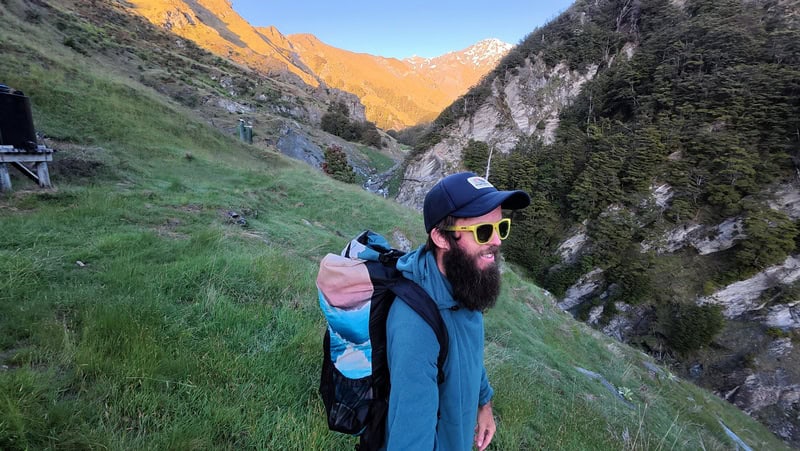
If I need a little more space I will take the Kiwi Ultralight Tui 42, which means it ends up on most of my adventures overseas (I can’t quite fit all my stuff in a 32 litre pack as much as I’d love too). This is an even simpler pack than the OMM Classic 32. It’s got the main compartment which is one big pocket, with a roll top closure.
As it’s so light weight at 380 grams, I have started putting it into one of these IKEA Bags when I travel on buses/planes to protect it. The Ikea bag folds down to very little so it’s not a burden to carry in the pack when I’m hiking.
The big stretchy pocket on the front seems to fit everything, I just need to take care of it as it’s got a few holes in it now. The same material on the water pocket (or rain jacket) pockets on the side are spacious too. The hip belt pockets are great for snacks too. The biggest downside is the shoulder strap pocket.
You can learn and buy more here.
3. DECATHLON KIPRUN 10L VEST. This is what I use for most of my day adventures, and yes, I can bring all the gear I need to be safe in the mountains with this. A vest is a lot more comfortable than most classic day packs for me. Learn More Here.
OTHERS: MACPAC RAPAKI 22L BACKPACK (details here) & MACPAC AMP ULTRA 15L VEST (details here). Both have there uses from time to time.
2. SLEEP SYSTEM
SLEEPING BAG/QUILT
KIWI ULTRALIGHT DOWN QUILT
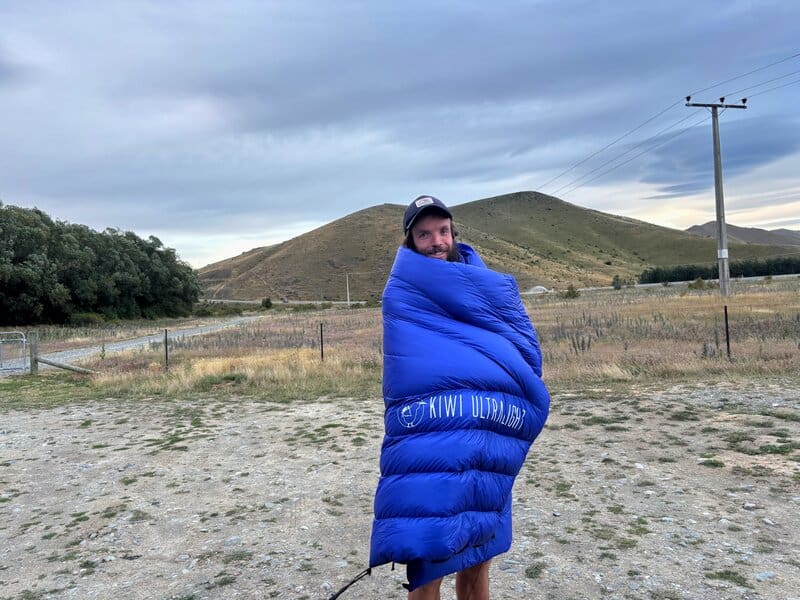
It’s been a journey with sleeping bags. I started with a synthetic sleeping bag (discounted THII from Sea to Summit), then went to a down sleeping bag (Dusk 400 from Macpac), before being put onto quilts so I now rock the Kiwi Ultralight Down Quilt for everything.
At a total weight of 605 grams (0-degree comfort), the 850+ Fill Power Goose Down has kept me warm in every situation I’ve taken it too so far around the world. I love how small it packs down, and when it’s time to sleep I can just throw it on top of me and I’m ready to pass out. And not being in a sleeping bag makes the daunting process of getting up for a middle of the night pee way less hassle! I would recommend.
You can buy the product here, and read my indepth review here.
If for some reason I didn’t have access to my quilt, I’d happily take the Dusk 400 still.
SLEEPING MAT
MACPAC ULTRALIGHT THERMAIR SLEEPING MAT
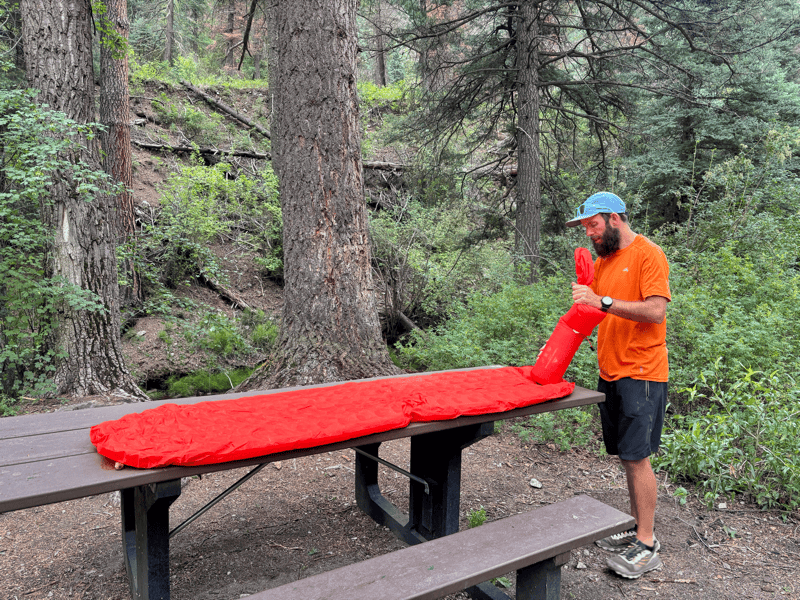
For the longest time, I went without a sleeping mat (the OMM backpack has an internal half pad you can use)…I’m luckily able to sleep on most surfaces (spending lots of time in Asia may have helped) so never saw the real benefit of a quilt. But there was a few nights where the ground just sapped the heat too much…and now that I’m a quilt convert, the weight saved over a sleeping bag goes towards a mat. The Macpac Thermair Ultralight pad goes good, especially at its price point.
Read my full review here or head to the Macpac website here.
PILLOW
MACPAC THERMAIR COMPACT PILLOW
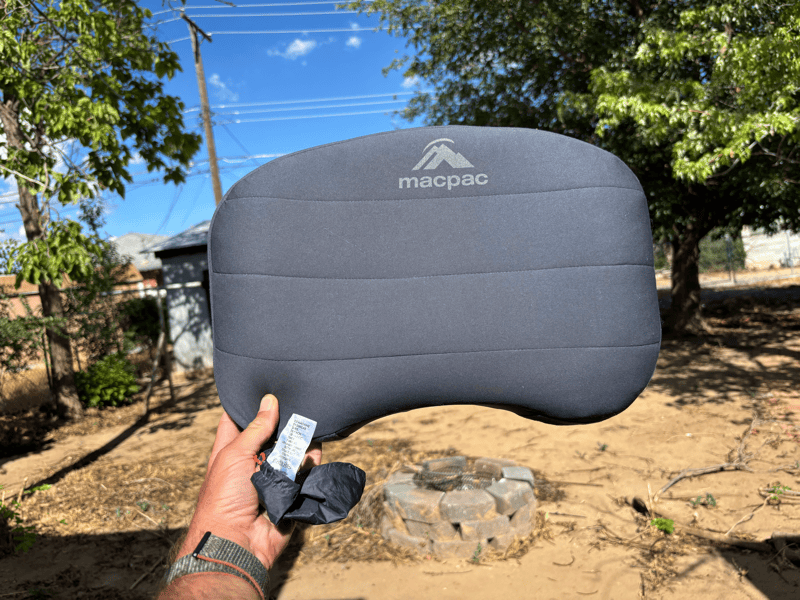
Like the sleeping mat, I’ll often go without a pillow and stuff a dry bag with clothes instead. Buuuut, I’ll be honest…I do sleep better with a legit camping pillow. I’ve only tried the Macpac Thermair Pillow and it works for me. I did accidentally blow into the main compartment at one point which ruined the bladder due to the moisture…but the new one has been good for 20+ nights.
See the product page here.
3. TENT
GOSSAMER GEAR THE TWO
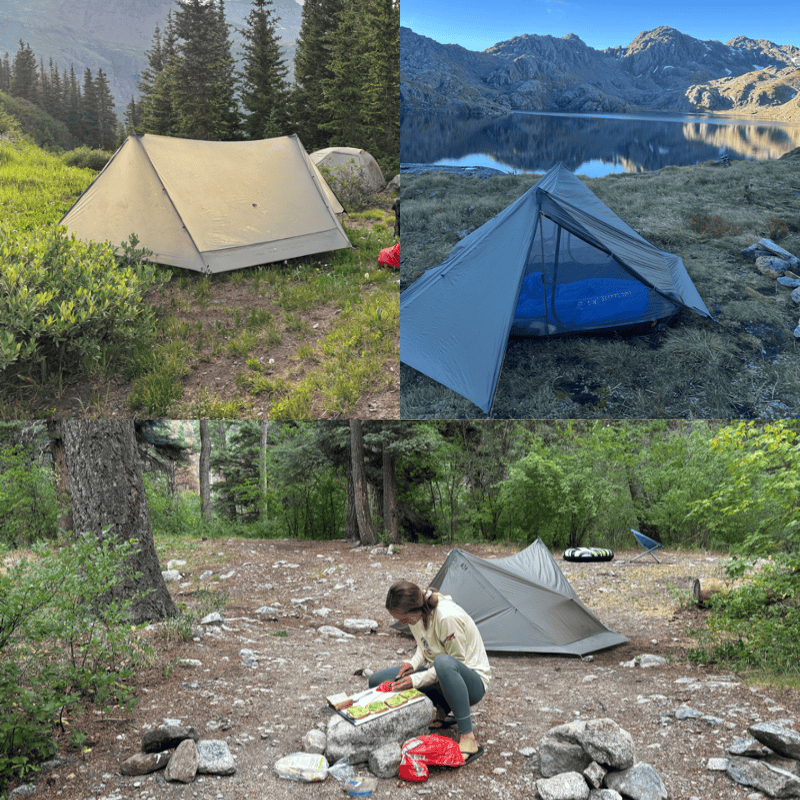
After spending a long time using the Macpac Bush Cocoon (bivvy) I got a girlfriend who loves camping. I was in the US at the time and ideally would have got a Durston tent, but they were sold out so afrter way too much research settled on Gossamer Gear’s The Two.
At less than 1kg for the full kit (slightly more if my girlfriend doesn’t bring her hiking poles, and we need to use the carbon poles they have included).
Do I love it? Loves a strong word, with condensation being the thing that is always a drama with it. No matter what we do, there just seems to be a lot of condensation. Single wall tents will always have a bit, and it seems like they’ve updated this tent to help ease this issue…but still. I’m not going to get rid of it though…it’s easy enough to set up and if it’s raining we stay dry so that’s good for now.
4. CLOTHING
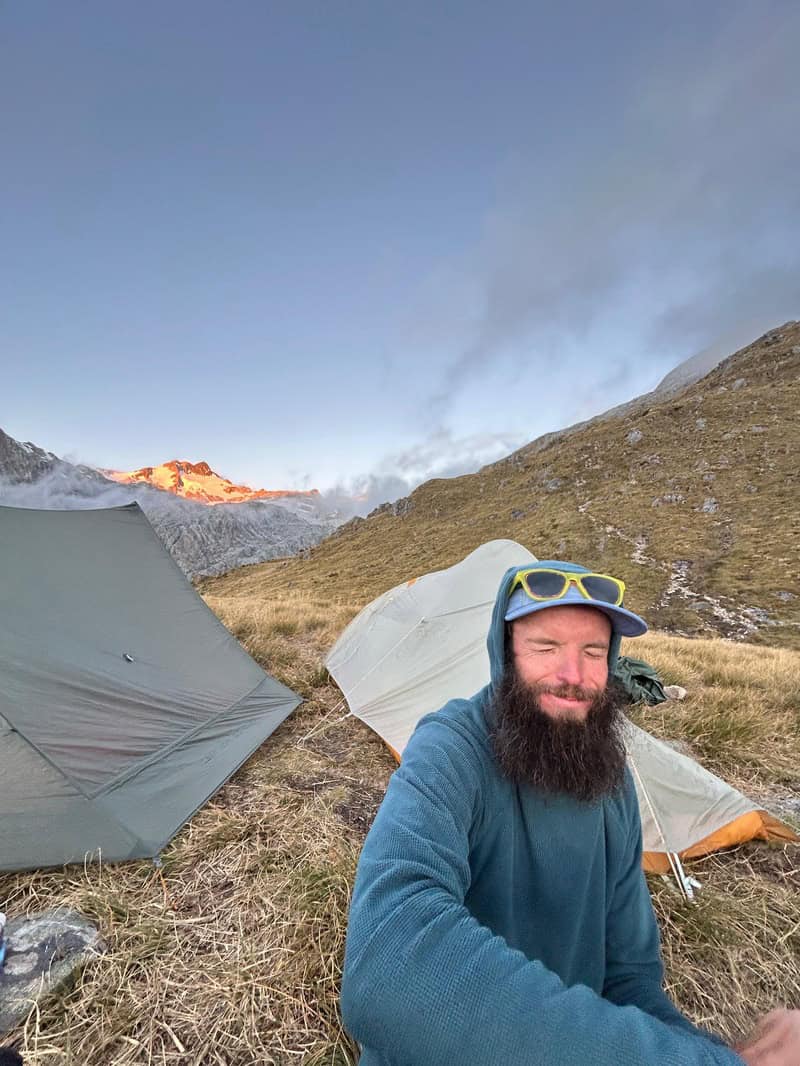
Happily wearing the Air-Grid fleece just as the sun is setting on a night camping near Brewster Hut.
FLEECES
My two fleeces are a coin flip between for which one comes on a trip. They are the Zorali Air Grid Fleece and the Macpac Pisa Jacket. I love both!
The Macpac Pisa Jacket (review / buy here) is my goto jacket, and the one I do more often. It’s super warm and when it’s tucked into the pocket doesn’t take up too much space.
The Zorali Air Grid Fleece (review / buy here) is also solid warmth to weight wise and is a bit of a snugger fit which I like. Especially around the neck.
BASELAYERS & UNDERWEAR
I usually use the Kathmandu polypro pants and the Macpac Prothermal Baselayer top. I got polypropylene rather than the Macpac polyester baselayer pants as the latter isn’t allowed for mandatory gear at some events. No dramas with these, I can recommend them both. If they every wear out I may transition to merino.
I do have the Kathmandu baselayer top as well.
For underwear, I’m starting to transition to all merino boxer briefs…so far the Macpac Merino 180 Boxer’s go good.
HATS
I switch between my Macpac Trucker Hat (no longer available) and Mountain Skag Speed Lid. I normally got for the speed lid as it’s so light and can be scrunched up and put in a pocket, and Bradley, the Founder, is a good friend. I’ve had it for 180 months or so and it still goes great.
SUNGLASSES
I’m not loyal to any sunglasses…my current pair are Goodr’s. As long as I don’t have the reflective lenses I’m happy with them (especially for the price). The ones with the reflective lenses start scratching and flaking quickly in my experience.
SOCKS
This is another transition where I’m leaving synthetic to go for merino primarily.
Having tried Norsewear and Macpac merino so far, both go good. Previously I was loyal to Macpac Trail Quarter socks.
RAINWEAR
I have a Macpac Tempo Rain jacket which I’ve had for about 5 years and it still goes good (not that I use it often). It’s no longer for sale. I’d recommend talking to your friends about rain jackets they like…it’s a bit of a touchy subject with rainwear now trying to go PFAS free (learn more here).
Macpac Nazomi Pants and Inov8 Waterproof Overmitts. Both of these options I’ve not actually had to wear, but they both fold up tiny and are lightweight so aren’t a burden.
FOOTWEAR
I’m not a footwear nerd, but am team trail shoes rather than hiking boots.
The shoes I’ve purchased multiple times (I’ll wait for specials) which I find great for both hiking and trail are:
- Nnormal Krejags (I haven’t tried the 02, but 01 was great…I get them delivered from RunningWarehouse.com.au)
- Decathlon Kiprun MT3 (I’ll buy them when overseas)
- New Balance 410v9 (good reliable price friendly trail shoe – can get them in places throughout NZ like Rebel Sports)
T-SHIRTS
I live in the Macpac Trail tees (short sleeve). I have about 6-ish of them I think…they’re what I wear as my trail tee and everyday tee 90% of the time. You may see me in a random cotton tee or t-shirt given from an event.
SHORTS
And about 90% of the time you’ll see me in the Macpac Fast Track shorts. I haven’t tried the latest version, hopefully they’re as good as the original. The other pair of shorts I’ll wear are the Kuhl Revivr shorts that I have one pair of.
*I don’t wear hiking/runner pants/joggers. If need be I’d use the baselayer pants and/or rain pants.
GLOVES
Gloves matter! If you can’t feel your hands, things can start to go downhill quick. I use the Macpac Performance Gloves in warmer conditions and the Macpac Stretch Gloves if it’s going to be colder. Note, neither are waterproof (check under rainwear above) and I do avoid most winters so there are plenty of warmer options that might be more suitable for you.
OTHERS
I will also bring a polypro beanie, polyester buff (will switch to a merino one sometime), and
5. ACCESSORIES
WATER
I’m on team softflask. The Macpac Soft flasks go good, and are on the cheaper end.
I have a Water to Go filter sugarcane bottle, but you’ll usually see me using the Katadyn BeFree filter as it’s easier to get water into other vessels.
COOKING
I rarely use cook my food, but if I do, it’s the Furno 360 stove that I got from a friend and a Macpac solo pot.
PACK LINERS
I use ultralight dry bags from Macpac in various sizes and use them to store everything in…for things like my phone I’m still conservative and put it inside a plastic bag just incase.
POWERBANK
I have tried various powerbanks over the years, and now have a Xiaomi 1000mAh I got in China after one got confiscated entering china (you need one with CCC certification). Note: some airlines will not allow 20,000 power banks now…so 10,000 is good enough.
This powerbank is fine. I would Google ‘ultralight powerbanks reddit’ to see what the consensus is on the best powerbanks lately. Normally Anker powerbanks are the winner.
And then I’ve got all the associated chargers.
HEADTORCH
I got Fenix HM65R-T V2.0 Rechargeable Headlamp for some long running events I had in the past that involved running through the night. The middle setting is brilliant, with plenty of lumens (400) to last most of the night (12 hours) in a pefect world.
But for most hikers, it’s not going to be a winner as it doesn’t have a red light. Which is a bit annoying. But I survive…and hopefully haven’t annoyed any fellow hut goers. For kiwi spotting you can use red cellophane.
My partner has a Nitecore headtorch (I can’t recall the model atm) which does have a red light, is rechargeable and more than enough lumens. I can recommend them, especially for the price point.
PLB
To this point, I usually am working at Macpac where I can grab one of the PLBs in store that you can hire out (the ACR ResQLink 400).
OTHERS
I currently have an iPhone 15 and a Coros Apex 2 Pro. Both go good. I’ll also carry a basic emergency blanket, whistle, and some plasters. If I’m heading into sandfly zone, Goodbye Sandfly comes with me.
And there you have it, all of the gear you’ll find in my pack throughout the year. The gear that comes with me changes a little bit depending on the exact trip involved.
It’ll be interesting too see how this evolves over time. Let me know if I’ve missed out on anything.
If you’ve got any questions about this gear list, email jub@churnewzealand.com or leave a message below and I’ll do my best to help.
Chur,
Jub
p.s. Now check out some of these tracks in New Zealand that I’ve written about on Chur New Zealand to get amongst below.
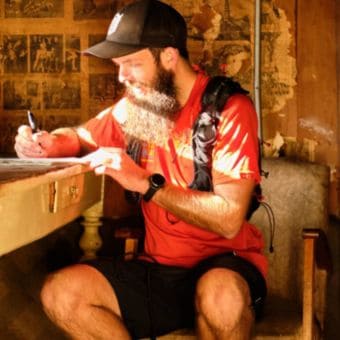
Hey, it’s Jub here. I’m the guy behind Chur New Zealand, helping you have the best time hiking, trekking, walking…whatever you want to call it…in NZ. I’m based in Queenstown and am always out and about exploring trails, old & new. If you have any questions, reach out.