
“You’re right that the fear of the unknown is the biggest barrier to selling quilts in NZ. In all seriousness, we believe that quilts are a superior product (otherwise, we would simply make sleeping bags), and educating the consumer is a crucial part of our job. That’s one of the reasons we have our “Why Quilts” page. Once people get into a quilt, they rarely want to go back!”
That’s what Cody from Kiwi Ultralight mentioned when I told him I’ve found it hard to convince myself a quilt would work.
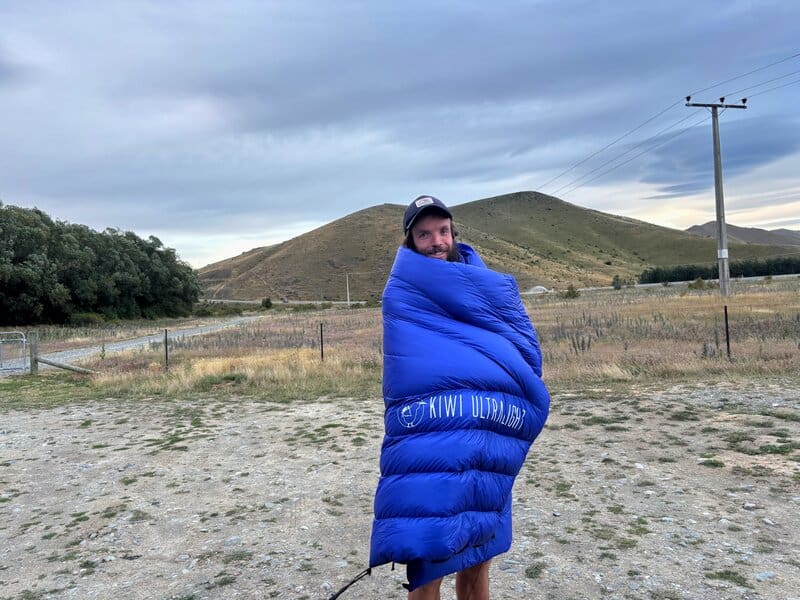
Before this point I’d read countless reddit threads and watched several videos where everyone raves about switching from a sleeping bag to a quilt.
But it was still hard to convince myself that a quilt MIGHT be better. Sleeping bags are all I’d known since growing up. They were first advertised way back in the 1850’s…they’ve got the reputation.
BUT I was curious. But I didn’t want to try one out, then regret buying it as I like a sleeping bag better.
That said, Kiwi Ultralight gifted me one of their NZ made 0-degree comfort quilts which was awesome. It was time to give one a whirl.
This was back in June 2025. Given the time of year I got the quilt, I didn’t have time to try it in the backyard so I decided to pull the trigger and take just the quilt on my next longer trip, which started in the North Island, then saw me use the quilt in China, Japan, USA, Armenia, Georgia.
This post will give you a run down on my experience and my general Kiwi Ultralight quilt review.
TABLE OF CONTENTS
1. Kiwi Ultralight Specs & Features
2. My Pre Quilt Concerns
3. My First Kiwi Ultralight Quilt Experience
4. The Next Nine Months With The Quilt
5. Back To The Pre Quilt Concerns
6. Q&A With Cody From Kiwi Ultralight
1. KIWI ULTRALIGHT SPECS & FEATURES
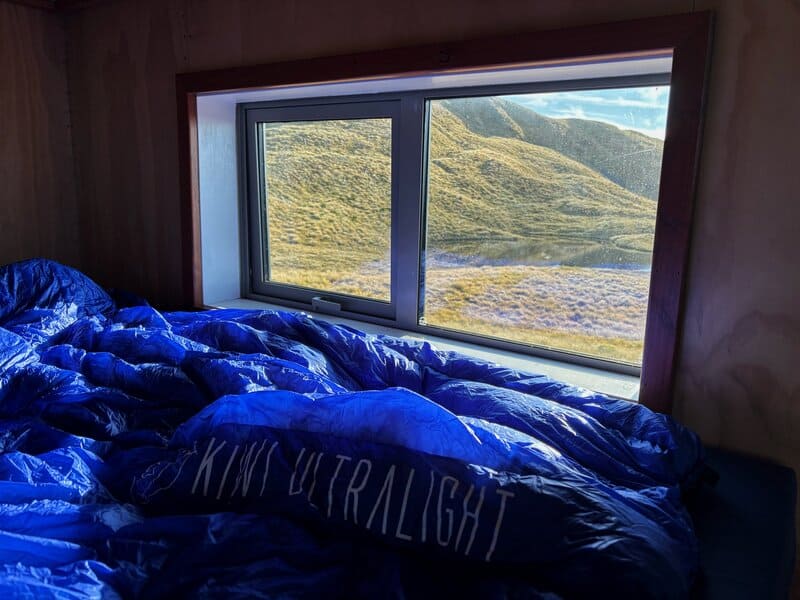
Weight: 605g (413 grams of down)
Comfort Rating: 0°C
Limit Rating: -6°C
Features
- vertical box baffle style
- 10D soft-touch nylon shell
- versatile zip/drawstring footbox
- 850+ fill power goose down (ethically sourced and RDS certified)
- 20% overstuff to for improved durability and longevity
- Wide top/hip cut (140cm), tapered footbox
- Packed dimensions: 30x20cm (compresses further if needed)
2. MY PRE QUILT CONCERNS
- Would it constantly be falling off me during the nights where it’s too warm.
- The draft!
- What if I just miss the snug as a bug feeling of a sleeping bag.
3. MY FIRST KIWI ULTRALIGHT QUILT EXPERIENCE
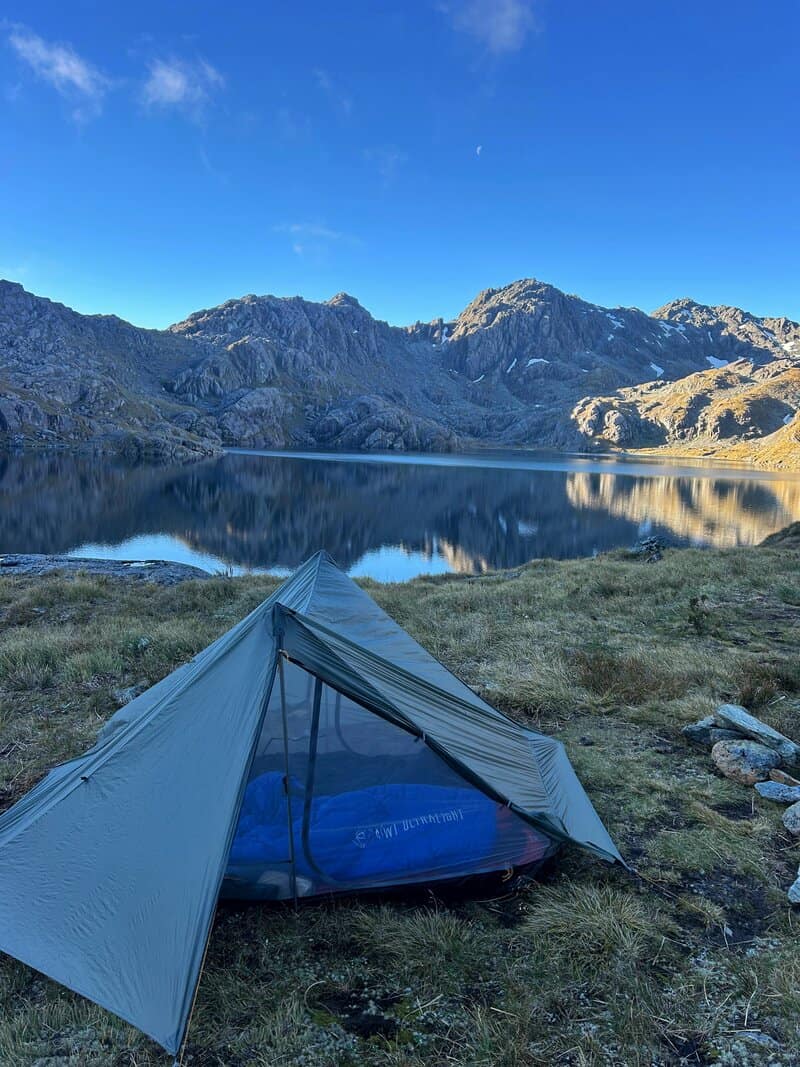
Before heading overseas, I spent one last time in Dad’s house on the North Island before the keys were handed over to the new owners.
As a kid the house was freezing in winter if the fire wasn’t cranking. In June we had sold the house, so with zero furniture or carpet left, it was just me, my mat and my quilt.
I’m not going to lie, I was nervous I’d be freezing that night.
I set up the quilt, locked my feet into the footbox and hoped I’d be war. But what if there was a gap in the quilt and cold air rushed onto my bare skin and woke me up.
Well, turns out I woke up in the middle of the night…sweating. I’d wrapped myself so tightly, it was a bit over the top. I over did it a bit…just a wee bit.
But that at least gave me some confidence I’d get through the upcoming overseas travels.
4. THE NEXT NINE MONTHS WITH THE QUILT
Japan (July): The next time I used the quilt was while camping at the base of the Northern Japanese Alps. My concern this time was that I’d be too hot to have a 0-degree comfort quilt on me.
But it turns out it was fine, and I treated it just like a blanket on a hot night at home…it was loosely on me, but I was able to kick the legs out when need be and I didn’t sweat at all during the night. I used the quilt a couple more times in Japan with no issues.
Iowa, USA (August): The next time I was intrigued to see how it would hold up on a summer night camping in Iowa with my partner. Would we be able to share the quilt on a warm night comfortably?
We were camping next to the car, so had her sleeping bag nearby if needed, but we both found that we slept well…it would have been slightly better if our sleeping mats were the same height. But given the temperature, we didn’t need to wrap up close together.
Georgia – the country (September): That changed a couple of months later when we were camping in Tbilisi National Park. I forgot to take a reading of how low the temperature got overnight, but it was better for her to sleep in her bag and I kept the quilt for myself. So we’ll need to tinker with that in the future.
That said, I certainly wasn’t cold. We camped in a few places around Georgia, including on the famous Mestia to Ushguli hike. It was all good!
New Zealand (summer): I haven’t been on as many overnight adventures as I’d have liked this summer (weather things).
But, it’s been on me with every trip this summer. In fairness, I don’t even consider taking either of my two sleeping bags (Macpac Dusk 400 and Sea to Summit Trailhead THII). While I like both of them, the weight savings are just too good with the quilt.
It’s safe to say I’ve a quilt convert.
It’ll be coming with me overseas again this year.
5. BACK TO THE PRE QUILT CONCERNS
- Would it constantly be falling off me during the nights where it’s too warm.
- The draft!
- What if I just miss the snug as a bug feeling of a sleeping bag.
Nope, this is a non-issue. I’ve rarely used the pad straps, and haven’t been bothered at all.
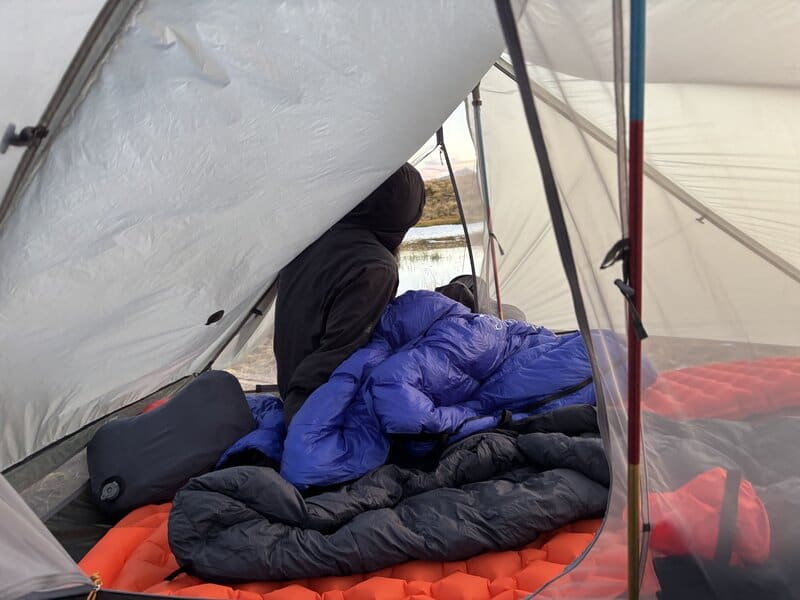
What draft? I’ve had some windy and cold nights in the tent (by Brewster Hut) with the quilt and it hasn’t been a concern.
Now that I reread this…if I wanted that snug as a bug feeling, wouldn’t that mean I would sleep in a sleeping bag at home? Silly argument!
6. Q&A WITH CODY FROM KIWI ULTRALIGHT
I had some questions I wanted to ask Cody, who was nice enough to answer them. I’ve copy pasted the dialogue direct from the emails:
How do you measure the comfort ratings for the quilts given there’s no standardised test like there is for bags?
While there isn’t a regulated standard for quilts as there is for sleeping bags, there is a standard method for calculating quilt temperature ratings which is used by essentially all quilt manufacturers around the world. The limit temperature is based on the loft or thickness of the quilt – the thicker the quilt, the lower the limit temperature. There are standardised loft values for each temperature rating we use. The comfort temperature is an approximation of the comfortable temperature to use the quilt based on experience. The comfort temperature is more subjective and technically depends on the ground insulation, type of mattress, clothing, as well as each person’s personal preference – but a standard assumption used by most brands is that the comfort rating is around 6 degrees warmer than the
limit.
When Kiwi Ultralight says ‘NZ Made’, what does that mean exactly? Are all materials imported and fully assembled here etc?
That’s right, we import our materials from various overseas suppliers and assemble, size, and stuff the quilts here. Our NZ-made quilts are the one product that we make entirely in house, our other NZ-made products have local sewests pitching in. It is worth noting, depending on how you write this section, that we do also have a line of quilts at a cheaper price point, which are fully made to our spec outside of NZ by a trusted manufacturer (who also makes quilts for several other major quilt brands, several of which you could name off the top of your head). The quality of these is impeccable, and they’ve been more of a surprise hit with the NZ audience than we expected!
Have you been noticing quilts are getting more popular? Are there any people who are against them?
We definitely see an increasing demand for our quilts. This is likely due to more and more people being able to see them out there in use, as well as discussing them online. Not to mention their clear superiority over bags once you understand the concept!
There hasn’t been much direct opposition to the concept. However, we do get a lot of emails from people who are keen, but can’t quite wrap their head around the pad strap system and avoiding draughts. We have a video [2] which gives a demonstration of using the pad strap system, as well as a detailed “Why Quilts? [3]” page, which clears up a lot of the questions people have.
What’s your 10-second elevator pitch on why someone should use a quilt?
A quilt gives you the warmth of a sleeping bag without the unnecessary weight and bulk. By removing compressed underside
insulation and pairing premium 850 fill power down with an efficient pad-strap system, you get a lighter, more compact, more versatile sleep system that reflects the latest in outdoor gear innovation.
More casually speaking, we make quilts because they’re a better product. There’s no reason we couldn’t make sleeping bags, but we’re a bit idealistic, and it doesn’t make sense to us to sell an inferior product when we’re trying to improve Kiwi’s outdoor experience!
And there you have it. My review of the Kiwi Ultralight quilt after 9+ months of regular use.
I’m a quilt convert and I’ll be doing my best to nudge people to give them a whirl in the future.
If you have any questions about quilts, Kiwi Ultralight or not, let me know. I’m happy to help!
Feel free to check out my other gear reviews.
Chur,
Jub
Hey, it’s Jub here. I’m the guy behind Chur New Zealand, helping you have the best time hiking, trekking, walking…whatever you want to call it…in NZ. I’m based in Queenstown and am always out and about exploring trails, old & new. If you have any questions, reach out.
So so tempting, so for a quilt to work in colder months, you obviously will need a high R value sleeping mat. Obviously there a minimal insulation of the compressed side of a sleeping bag, but wondering about this aspect. Cheers
Hey Nigel,
I did wonder about this too…even compressed down would surely add a little extra warmth right? I haven’t done the science experiments…but even some of the lightweight mats have R values over 5 now…so that should be ok? Go the quilt!
Chur,
Jub